YouTube is one of the most popular video-sharing platforms in the world. Millions of people visit the website every day to watch videos on a wide range of topics, from music and gaming to cooking and DIY. Many people are now making lots of money from YouTube. You can do also.
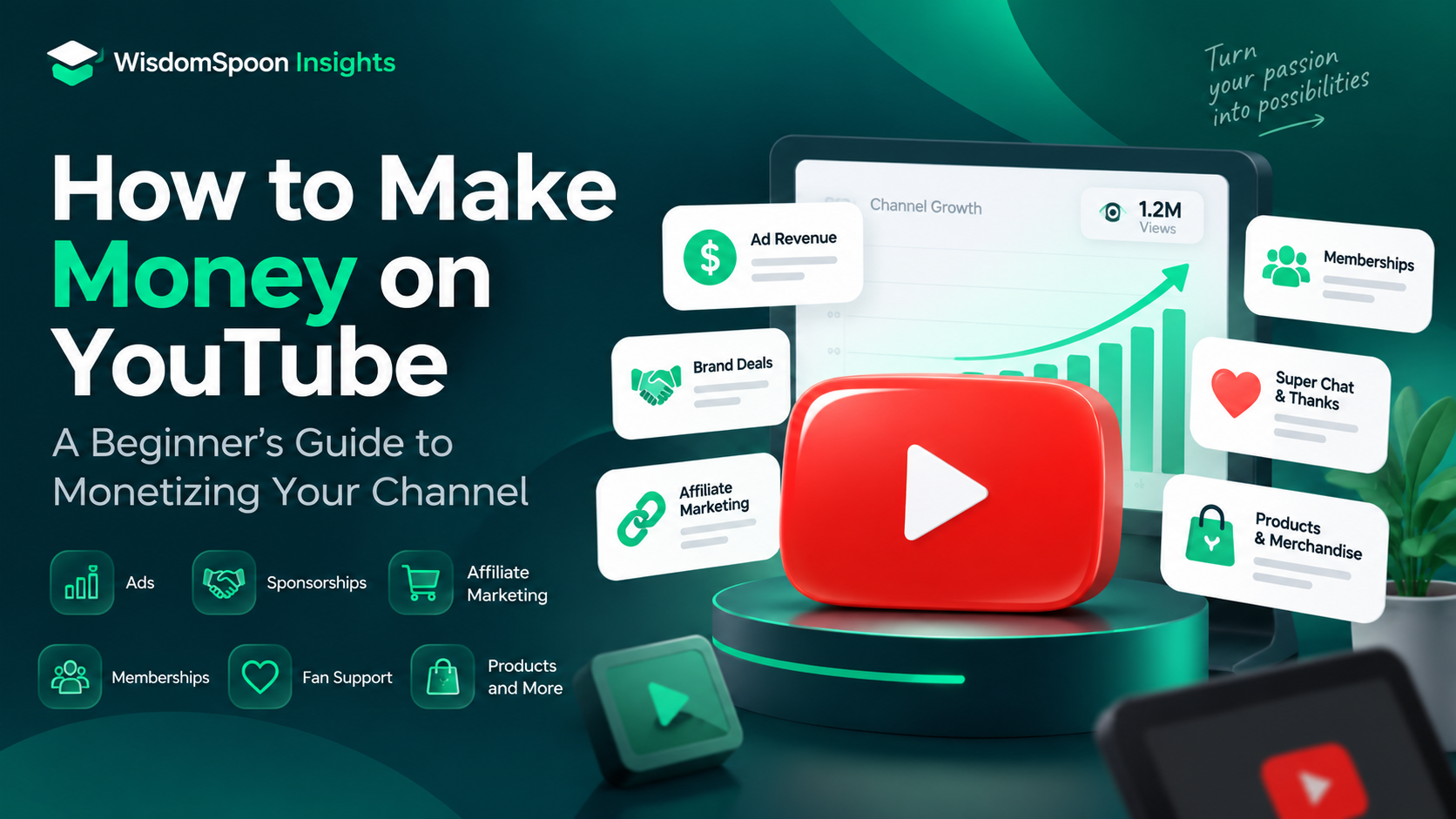
Advertising is the best-known YouTube revenue stream, but it is only one part of the creator economy. Depending on your audience, niche and stage of growth, income can also come from sponsorships, affiliate sales, channel memberships, fan support, products, services and other opportunities.
The most useful way to think about YouTube monetization is not:
“How many subscribers do I need before I can make money?”
A better question is:
“What value does my audience create, and which monetization methods fit that audience?”
A small specialist channel can sometimes generate meaningful income before a much larger entertainment channel because its viewers may have stronger buying intent, higher engagement or greater commercial value.
Let’s look at how YouTube monetization actually works and the different ways creators can build income.
First: Understand the Three Stages of YouTube Monetization
You do not have to wait until your channel is huge before thinking about monetization.
A useful way to approach it is in three stages.
Stage 1: Before YouTube Monetization
Even before qualifying for YouTube’s own monetization features, a creator may potentially earn through:
- affiliate marketing;
- sponsorships;
- consulting or services;
- digital products;
- physical products;
- licensing;
- external memberships or crowdfunding.
The key requirement is not a specific subscriber number.
It is having an audience that trusts you, engages with your content and takes action.
Stage 2: Early YouTube Partner Program Access
As of September 2026, eligible creators in countries where the expanded YouTube Partner Program is available can gain access to certain fan-funding and Shopping features at:
- 500 subscribers;
- 3 public uploads in the previous 90 days; and
- either 3,000 qualified public watch hours during the previous 12 months or 3 million qualified Shorts views in the previous 90 days.
Features at this stage can include channel memberships, Super Chat, Super Stickers, Super Thanks and eligible Shopping features.
Stage 3: Advertising and YouTube Premium Revenue
For full advertising and YouTube Premium revenue access in 2026, the current threshold is:
- 1,000 subscribers; and
- either 4,000 qualified public watch hours in the previous 12 months or 10 million qualified Shorts views in the previous 90 days.
Meeting the numbers does not automatically guarantee acceptance. YouTube reviews channels for compliance with its monetization policies.
Important: YouTube Has Already Announced a 2027 Change
Starting February 1, 2027, YouTube says new creators seeking ads and Premium revenue will still need 1,000 subscribers but will need either 8,000 qualified watch hours in the previous 365 days or 20 million qualified Shorts views in the previous 90 days.
Creators already in YPP are not affected by the new entry threshold. The earlier 500-subscriber fan-funding threshold remains unchanged.
Because YouTube changes its policies periodically, creators should always check the Earn section of YouTube Studio for their current eligibility.
1. YouTube Advertising Revenue
Advertising is the monetization method most people associate with YouTube.
Once eligible and accepted into the appropriate YouTube Partner Program monetization modules, creators can earn from ads shown around their content.
But there is no fixed amount paid per view.
Your actual advertising income can vary according to:
- audience geography;
- advertiser demand;
- niche;
- seasonality;
- video format;
- monetized playbacks;
- advertiser suitability;
- and other factors.
This is why RPM — revenue per 1,000 views — is much more useful than trying to assign one universal value to a YouTube view.
For example:
100,000 views at a $2 RPM ≈ $200.
100,000 views at a $6 RPM ≈ $600.
Same number of views. Very different revenue.
If you want further insights, please read >How Much Does YouTube Pay Per 1,000 Views?
2. YouTube Shorts Revenue
Shorts can also generate advertising revenue for eligible creators, but Shorts monetization does not work exactly like long-form watch-page advertising.
Advertising revenue generated between Shorts is pooled, allocated according to eligible views and then shared with creators under YouTube’s Shorts monetization system.
Creators therefore should not assume that the RPM from a long-form video can simply be applied to Shorts.
A Shorts strategy can be valuable for reach and audience discovery, while long-form video may serve a different role in engagement and monetization.
The strongest strategy may therefore be to ask:
What role should Shorts play in my overall channel—not whether Shorts or long-form is universally better?
You can also use WisdomSpoon for YouTube Shorts Earnings Calculator
3. Channel Memberships
Channel memberships allow eligible viewers to make recurring monthly payments in return for benefits such as:
- badges;
- custom emoji;
- members-only posts;
- members-only videos;
- early access;
- live streams;
- community access.
Memberships work especially well when your audience feels connected to the creator or community.
The mistake is offering memberships without giving people a reason to remain members.
Ask:
What ongoing value would make a viewer happy to pay every month?
A strong membership program may offer community, access or convenience rather than simply “more content.”
YouTube currently makes memberships available to eligible creators who meet its fan-funding requirements and other channel conditions.
4. Super Chat, Super Stickers and Super Thanks
YouTube offers several ways for viewers to directly support creators.
Super Chat allows viewers to pay to highlight messages during eligible live streams.
Super Stickers let viewers purchase animated messages during live streams and Premieres.
Super Thanks allows viewers to support creators directly on eligible regular videos and Shorts.
These features can work particularly well when the channel has an active community rather than simply passive viewers.
A creator with 20,000 deeply engaged followers can sometimes generate more fan support than a channel with a much larger but less connected audience.
This is another reason engagement matters in addition to subscriber count.
You can also use WisdomSpoon YouTube Engagement Calculator to measure the strength of their audience rather than merely counting followers.
5. Sponsorships and Brand Deals
For many established creators, sponsorships can become more valuable than advertising.
A company pays the creator to feature, discuss or integrate a product or service into content.
But sponsorship value should not be based only on subscriber count.
Brands may consider:
- average video views;
- audience demographics;
- niche;
- engagement;
- audience geography;
- brand fit;
- integration length;
- usage rights;
- exclusivity;
- and campaign objectives.
A channel with 50,000 highly relevant viewers may be more commercially valuable to a particular company than one with 500,000 poorly matched followers.
Creators should also disclose sponsorships correctly. YouTube requires creators to declare branded content using its paid-promotion controls, and U.S. FTC guidance says material relationships with brands should be disclosed clearly and prominently; for video endorsements, disclosure should be in the video rather than hidden only in the description.
You can try using WisdomSpoon YouTube Sponsorship Calculator for realistic expectation
6. Affiliate Marketing
Affiliate marketing can allow creators to earn a commission when viewers purchase products or services using tracked links.
This works particularly well with:
- tutorials;
- product comparisons;
- reviews;
- software demonstrations;
- technology channels;
- beauty content;
- education;
- business content;
- and other subjects where viewers are actively considering a purchase.
The strongest affiliate strategy is not:
“Find the product with the highest commission.”
It is:
“Recommend something genuinely useful to the audience.”
Trust is far more valuable than a single commission.
Affiliate relationships should also be clearly disclosed.
Eligible creators in supported markets may also use YouTube Shopping to promote products from their own stores or, where available, products from other brands.
7. Sell Your Own Products
A creator does not have to promote somebody else’s product.
You can build your own.
Depending on your niche, that might include:
- merchandise;
- books;
- templates;
- courses;
- digital downloads;
- presets;
- guides;
- software;
- memberships;
- physical products.
This is where YouTube starts changing from a content platform into a business acquisition channel.
Suppose a video earns only $30 in advertising revenue.
If the same video brings ten customers who each buy a $40 product, the business value of that video becomes very different.
This is why creators should avoid judging every video only by its AdSense income.
8. Sell Services, Consulting or Coaching
YouTube can also be a powerful way to demonstrate expertise.
A creator publishing useful content about:
- marketing;
- design;
- programming;
- fitness;
- education;
- business;
- photography;
- career development;
- or another professional subject
may eventually attract customers for services.
The video itself becomes evidence of expertise.
Instead of telling people:
“I know how to do this,”
your content demonstrates it.
A smaller expert channel can therefore become commercially successful without millions of views.
For some professional creators, generating five valuable client leads can matter far more than generating another 100,000 entertainment views.
9. License Your Content
Some original video content can have value outside your own channel.
News organizations, publishers, production companies and brands may license footage that is:
- unusual;
- newsworthy;
- exclusive;
- difficult to reproduce;
- visually valuable.
Examples could include unique events, wildlife footage, unusual recordings or specialist archive material.
Always make sure you actually own the necessary rights before attempting to license footage.
Licensing will not apply to every creator, but for the right content it can become an additional revenue source.
10. Crowdfunding and External Communities
Creators may also build revenue outside YouTube itself through supporter platforms, paid communities or crowdfunding.
This is useful when viewers want to support the continuation of a project even when the content itself is freely available.
Successful supporter models normally provide one or more of the following:
- access;
- community;
- recognition;
- bonus material;
- behind-the-scenes content;
- participation;
- or a sense of helping something valuable continue.
The lesson is the same as with channel memberships:
People need a reason to keep supporting you.
Which YouTube Monetization Method Should You Choose?
Do not try to activate every revenue stream at once.
Start with your audience.
Ask three questions.
1. Why do people watch me?
Entertainment?
Education?
Expert advice?
Product research?
Community?
2. What action would naturally follow the content?
A viewer watching a camera review may be ready for an affiliate link.
A business viewer may be interested in consulting.
A loyal entertainment audience may prefer memberships or merchandise.
A large general audience may work well with advertising and sponsorships.
3. Which income source scales without damaging trust?
This is critical.
Every monetization opportunity should strengthen—or at least preserve—the relationship with viewers.
Short-term income that destroys credibility is expensive.
A Better Beginner Strategy: Build Audience Value Before Revenue
A new creator’s first goal should not be:
“How quickly can I monetize?”
It should be:
“How quickly can I create something people repeatedly choose to watch?”
Focus first on:
- a clear audience;
- useful or entertaining content;
- compelling titles and thumbnails;
- audience retention;
- consistent quality;
- learning from analytics.
Subscribers and revenue are normally outcomes of creating value.
How WisdomSpoon Can Help You Track Progress
You should not guess whether your channel is improving.
Use data.
YouTube Channel Analyzer
Use it to look at public channel performance, recent momentum and how your recent content compares with longer-term channel activity.
YouTube Engagement Calculator
Measure whether viewers are actively responding to the content rather than simply passing through.
YouTube Money Calculator
Model what different traffic levels could mean under different RPM assumptions.
YouTube RPM Calculator
Understand how efficiently your existing views are generating revenue.
YouTube Shorts Earnings Calculator
Model Shorts revenue separately rather than applying long-form assumptions.
YouTube Sponsorship Calculator
Build a more structured starting point for sponsorship pricing based on audience and performance rather than follower count alone.
The tools should not replace YouTube Studio.
They should help creators interpret numbers, explore scenarios and ask better questions.
A Simple 90-Day Plan for a New YouTube Creator
If you are just starting, keep your plan simple.
Month 1: Find the Audience
Choose one clear subject area.
Publish enough content to learn what people actually respond to.
Do not judge the channel after two videos.
Month 2: Look for Patterns
Identify:
- which topics generate views;
- which titles attract clicks;
- which videos retain viewers;
- which subjects generate comments;
- which videos outperform your normal results.
Create more content around evidence, not assumptions.
Month 3: Start Thinking Commercially
Ask whether your existing audience could logically support:
- affiliate products;
- services;
- sponsorships;
- memberships;
- products;
- or future ad revenue.
You do not need to monetize every viewer.
You need to understand where audience value and business value overlap.
How Much Money Can You Make on YouTube?
There is no reliable universal answer.
A channel’s income depends on:
- views;
- RPM;
- niche;
- geography;
- audience quality;
- sponsorship demand;
- products;
- services;
- conversion rates;
- and the creator’s overall monetization strategy.
This is why claims such as:
“1 million YouTube views equals $X”
should always be treated carefully.
The same traffic can create dramatically different financial results for different creators.
Instead of asking:
“How much does YouTube pay?”
eventually ask:
“How much value does my channel create per 1,000 viewers?”
That is a much more powerful business question.
Important Insights
Making money on YouTube is not simply about reaching a subscriber threshold and switching on ads.
The strongest creator businesses usually combine three things:
Audience + Value + Monetization
Build an audience people care about.
Create content worth returning to.
Then choose monetization methods that naturally fit the relationship you have built.
Advertising may become one part of that business.
It does not have to be the whole business.
Ready to understand your channel better? Start with the WisdomSpoon YouTube Channel Analyzer, then use the RPM, Money, Shorts, Engagement and Sponsorship calculators to explore different growth and income scenarios.
FAQs
How many subscribers do you need to make money on YouTube?
There is no single number for all types of income. You can potentially earn through sponsorships, affiliate marketing, products or services before joining YPP. For YouTube’s own monetization features, different thresholds apply. In 2026, expanded YPP fan-funding access can begin from 500 subscribers in eligible markets, while full ads/Premium access currently requires 1,000 subscribers plus the required watch-time or Shorts-view threshold.
Can you make money on YouTube without 1,000 subscribers?
Potentially, yes. External income such as affiliate commissions, sponsorships, products or services does not depend on YouTube’s 1,000-subscriber advertising threshold. Some YouTube fan-funding features can also become available earlier through expanded YPP in eligible regions.
How much does YouTube pay per 1,000 views?
There is no fixed rate. Revenue per 1,000 views varies according to RPM, audience geography, advertiser demand, content and other factors.
Are YouTube Shorts monetized?
Yes, eligible creators can earn from Shorts Feed advertising under YouTube’s Shorts revenue-sharing model.
Can sponsorships pay more than YouTube ads?
They can. Sponsorship value depends on the audience, niche, average views, engagement, campaign requirements and other factors rather than simply subscriber count.